Low Back Pain & Disc Problems Treatment in Lahore
Patient Guide · Low Back Pain Treatment Lahore
Low Back Pain & Disc Problems Treatment in Lahore
Low back pain treatment in Lahore starts with working out what is causing your pain — most often the muscles, joints or discs of the lower back. At Dr. Haseebullah — Advanced Spine Care & Stroke Rehabilitation Center in Johar Town, care usually begins with an assessment of how you move, followed by hands-on physiotherapy, exercises and advice on daily movement. This guide explains the common causes, including disc problems and muscular pain, what can help and when to seek care.
What causes low back pain?
Low back pain has many possible causes, and most of it is not caused by serious disease. Some of the most common causes include:
- Muscular pain — strained or overworked muscles in the lower back, often after lifting, a sudden movement or a new activity.
- Disc problems — irritation or a bulge in one of the discs between the vertebrae.
- Joint irritation — stiffness or irritation in the small joints of the spine.
- Poor posture and overuse — long hours sitting, bending or standing in one position.
- Weak core and hip muscles — less support for the spine during everyday movement.
- Inactivity — long periods without movement can leave the back stiff and sensitive.
Back pain can also be linked with stress, poor sleep and low mood, which can make pain feel worse. An assessment looks at all of these, not just the back itself.
What are disc problems?
The discs are soft cushions between the bones of the spine. They help the spine bend and absorb load. A disc problem usually means a disc has bulged or, less often, herniated — the soft centre pushes out and can irritate a nearby nerve. This can cause pain in the lower back, and sometimes pain, numbness or tingling down the leg, known as sciatica. Read our sciatica treatment in Lahore page for more on leg pain from the back.
Most disc problems improve with conservative care, and many disc changes seen on scans are part of normal ageing and are not the cause of pain. That is why scans are not always needed — a careful history and examination usually tell us what is going on.
Is my back pain muscular or a disc problem?
Muscular pain and disc problems can feel similar, but there are some patterns. Muscular pain is usually a local ache or stiffness in the lower back, worse with certain movements and often eased by rest and warmth. A disc problem more often causes pain that travels into the buttock or leg, with numbness or tingling, and is often worse with sitting or coughing. Only an assessment can tell for certain, and the two can occur together. Both are common, and both can be helped with the right care.
How is low back pain treated?
There is no single treatment that suits every back. Care depends on the cause, your pain level and what you need to do each day. Physiotherapy is usually the first step. Your physiotherapist will assess how you move, discuss your goals and plan care around them. In some cases, your doctor may also discuss pain relief, an injection or, rarely, surgery. These are medical decisions, and your physiotherapist can help you understand the options and what to ask your doctor.
How can physiotherapy help low back pain?
Physiotherapy for low back pain aims to reduce pain, restore movement and build the strength and confidence to move again. Care at the clinic may include:
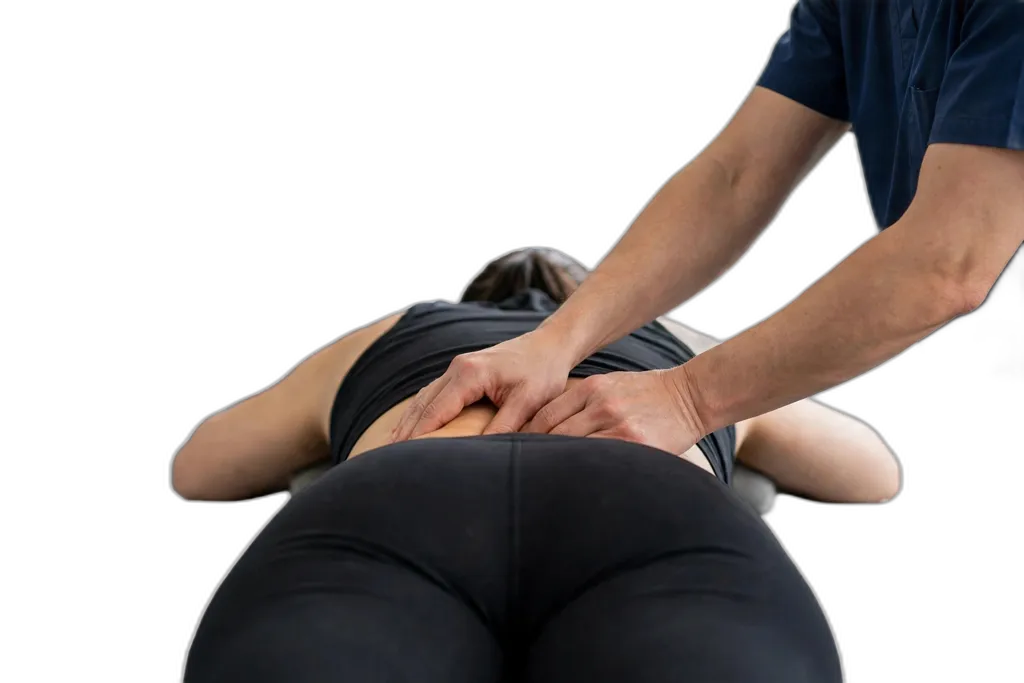
- Hands-on treatment, such as manual therapy and gentle mobilisation of the spine and hips.
- Exercises for the core, hips and back, progressed as pain allows.
- Movement retraining — how to bend, lift and sit with less strain.
- Advice on sitting, lifting and sleep positions that suit your back.
- Pacing — how to build activity up gradually without flare-ups.
- A home exercise plan, so you can keep working on your back between visits.
For ongoing back and spine care, see our spine care and back pain treatment in Lahore page.
What can you do at home?
Small, regular habits can support your recovery. Keep moving gently rather than resting in bed — prolonged bed rest usually makes back pain worse. Try gentle stretches and short walks through the day, and use heat on the lower back if it helps. Sit with support for your lower back, lift with your legs rather than your back, and change position often. Build activity up little by little, and be patient — back pain often improves in waves rather than in a straight line.
When should you seek care for back pain?
Book an assessment if back pain is limiting daily tasks, not improving after a few weeks, or keeps coming back. Seek care urgently if you notice any of these warning signs:
- Changes in bladder or bowel control, or numbness around the saddle area.
- Weakness in the leg that is getting worse.
- Fever, or unexplained weight loss with the pain.
- Pain after a fall or accident.
- Pain that wakes you at night and does not ease.
These signs are uncommon, but they need prompt medical attention. For most people, back pain improves with movement, time and the right care.
Clinic facts: Dr. Haseebullah — Advanced Spine Care & Stroke Rehabilitation Center, 244-E1 Asaaf Medical Complex (Basement), Johar Town Phase 1, Lahore 54782. Phone and WhatsApp: +92 348 0789395. Open 24 hours, Monday–Sunday. Low back pain treatment Lahore appointments can be booked by phone or WhatsApp. See also our physiotherapy services in Lahore.
Book an assessment
If low back pain is limiting your day, book an assessment at the clinic in Johar Town. Call +92 348 0789395 or message on WhatsApp, and we will help you plan the next step. You can also read about the clinic and how to reach us on the Contact page.
Low back pain treatment Lahore — frequently asked questions
How long does low back pain last?
Most episodes of low back pain improve over days to weeks, especially with gentle movement. If pain lasts longer than a few weeks, keeps coming back or is severe, an assessment can help find the cause and plan care.
Do I need a scan for back pain?
Not usually. Most back pain is diagnosed by history and examination, and scans often show age-related changes that are not the cause of pain. Your physiotherapist or doctor will advise if a scan is needed, for example if there are warning signs.
Is it safe to exercise with a disc problem?
In most cases, yes. Guided movement and exercise are part of care for disc problems. The right exercises depend on your symptoms, so ask your physiotherapist to show you the ones that suit you and what to avoid.
What is the best sleeping position for low back pain?
Many people find lying on their side with a pillow between the knees, or on their back with a pillow under the knees, more comfortable. The best position is the one that lets you sleep well. If pain wakes you often, mention it at your assessment.